
 |
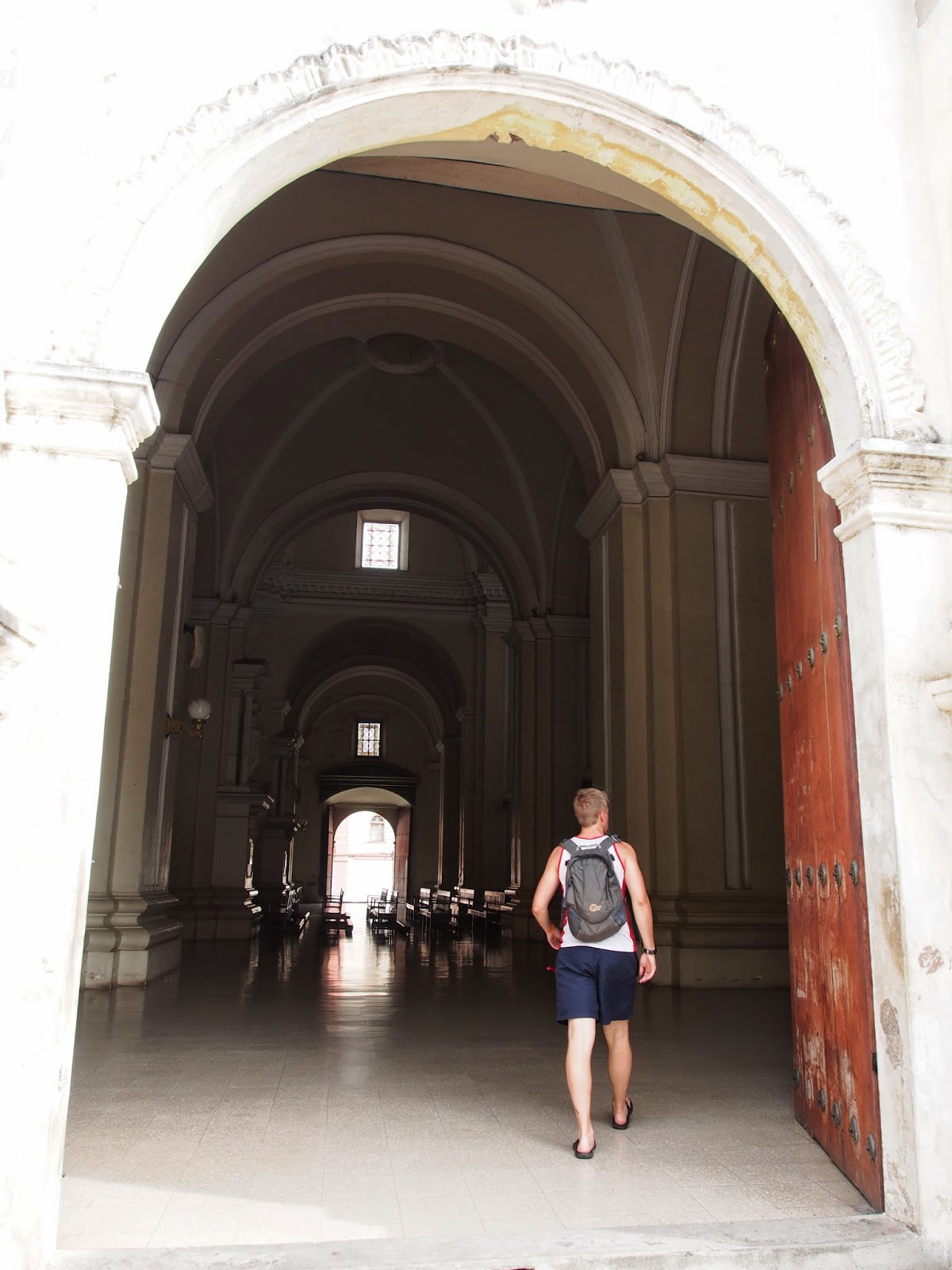
| Leon Cathedral |
On this trip I probably spent the most time in Nicaragua. What I found striking however in this largest Central American Republic, was not it’s physical beauty and volcanic landscapes or its incredible biodiversity. Rather my experience here was dominated by the Gringo Trail of youth hostels, bars, and restaurants that littered each and every town deemed worth visiting by my guidebook.
Of course when one travels a la Lonely Planet one can’t help avoiding the cottage industrial complex of hostels and attractions built around gringo backpackers. The cities in Nicaragua however felt like a special case; somehow the hostels were more manicured than usual, the tour packages slicker and too well-marketed for their own good, and the bars more riddled with special offers of things like lava shots that no locals in their right mind would order.
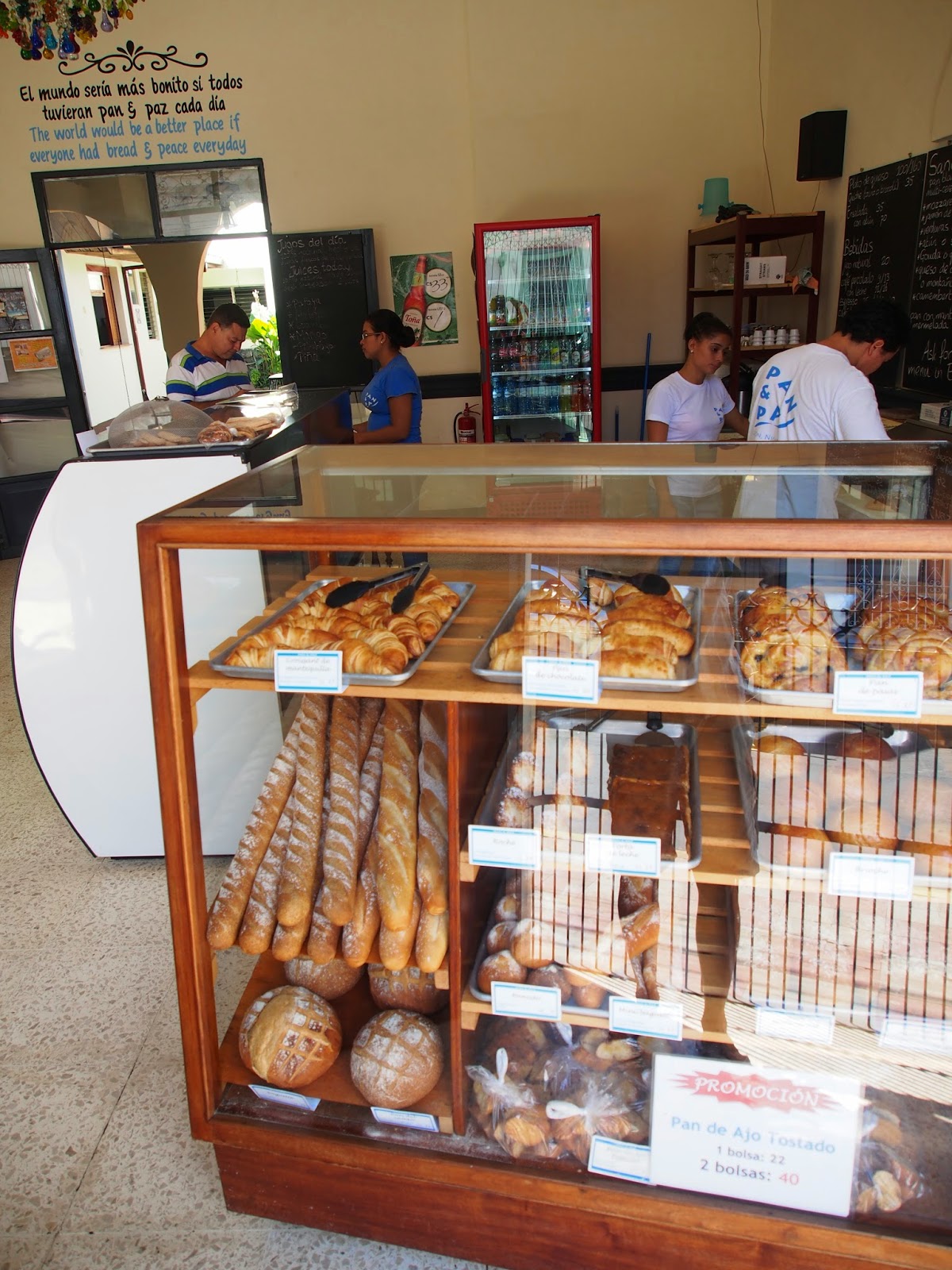 |
| Pan y Paz, a surprisingly good French bakery in Leon |
Also in Guatemala and El Salvador, I always had the liberating uncertainty of not knowing what my next stop was, and the exciting prospect of deciding where to speed off to on a day’s notice on faith of another traveler’s tip. In Nicaragua more than any other place I’ve backpacked to, my itinerary seemed hopelessly predetermined. People had one of two plans: going North or South, but pretty much everyone were stopping along the same cities and doing the same activities and tours. It was here that the Gringo “Trail” felt more like an actual well-worn trail than anywhere else.
This is not to say I didn’t find Nicaragua incredibly enjoyable. It was wonderful to meet up with old college friends and catch up as we roamed colonial Granada and hiked up to a waterfall in Volcan Madero. Volcano boarding in Cerro Negro was, in spite of its bonified tourist trap status, actually quite good fun. And there aren’t enough hostels and backpacker bars in the world that can cover up the stunning volcanic landscapes, the beautiful tranquility of Laguna de Apoyo, or stunning sunsets on the white sand beachs of Isla de Ometepe. Not to mention, I probably did my biggest share of drinking on this trip in Nicaragua (cue Las Penitas beach party, Sunday Funday in San Juan, and the like).
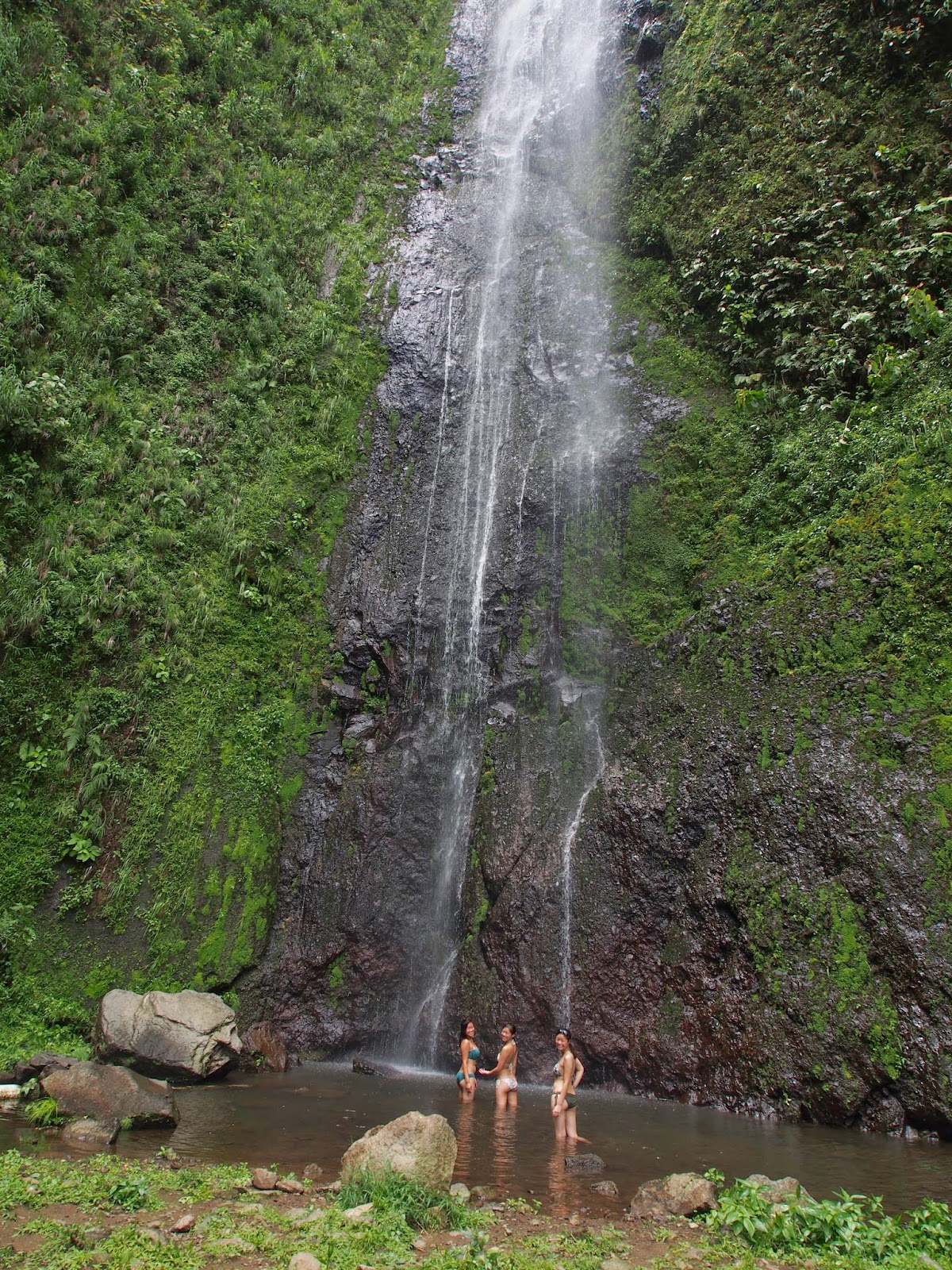 |
| Waterfall at Volcan Madero |
I was disappointed however, in how insulated I made myself from local people and culture not only in Nicaragua but in Central America in general. This is due in no small part to my lack of Spanish abilities, but also is a natural byproduct from traveling through backpackers filled with Westerners. In Nicaragua, one of the closest occasions I felt to having a meaningful interaction with locals came in Ometepe where an English-speaking local named Harold served as our driver and guide up to Volcan Madero and the trail to the waterfalls. We struck up a cordial conversation in English, but funny enough at the end of the day I learned that he had actually spent a large part of his life living in New Jersey, where three of his full-grown children now resides. Another time in Leon, the bar at my hostel was a local haunt for native pool sharks, and I worked up the courage to challenge them to a couple of games. In the process I learned that the local Leon version of 8 ball is much much more intricate than the one I know, and the experience again confirmed that my Spanish is nowhere near ready for conversation.
A big pleasant surprise in this country, was that Americans were received quite warmly here. Given the dark history of American interventionism in Nicaragua (from it’s hand in a coup in 1909, to de facto US military occupation for two decades afterwards, to US support of the dictatorial Samoza’s and the funding of the Contras), there are plenty of reasons for Nicaraguans to give at least a cold shoulder to American visitors. I was delighted by the continued warmness locals showed me even after I told them I am American, and also from hearing several locals speak positively about the US. Even in the historical Sandinista stronghold of Leon, Nicaraguans seemed to have done an admirable job of remembering their dark history but also maintaining an optimism and magnanimity towards its big neighbor up north.
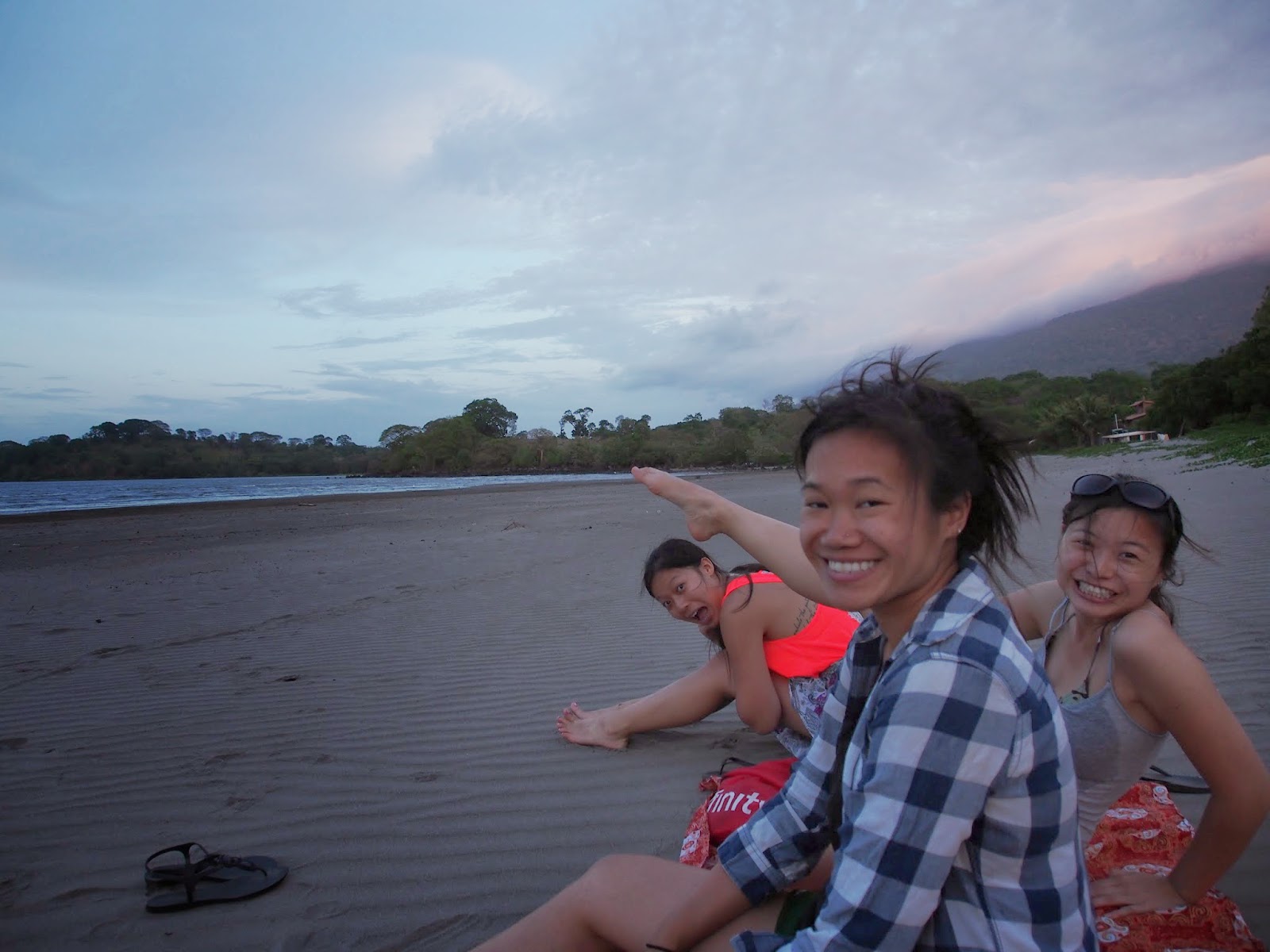 |
| Ometepe sunset at the beach |

