It’s difficult to take off the tinted lens with which Americans see Cuba. I live in a country whose history with Cuba involved in no small degree: complicity in business, hegemony, open conflict, outright invasion, a long detente, and it seems now the long-promised reconciliation. I’m from the same United States that sent troops (including a future president) to fight for Cuban independence from Spain, but also the same U.S. who propped up the brutal authoritarianism of Batista, the even the same U.S. that produced Ernest Hemingway, who wrote so eloquently of an old Cuban man and his turbulent relationship with the sea.
There is a potent amount of history here, which often translates to unbridled hatred of red Cuba; but just as often, the history fans a fervent romanticism of Cuba as a modern day Utopia untainted by McDonald’s and globalization. So many westerners seem to think of Cuba as a rebuke to Western excess in favor of solidarity, equality, simplicity, and a fervor for love, music, and life.
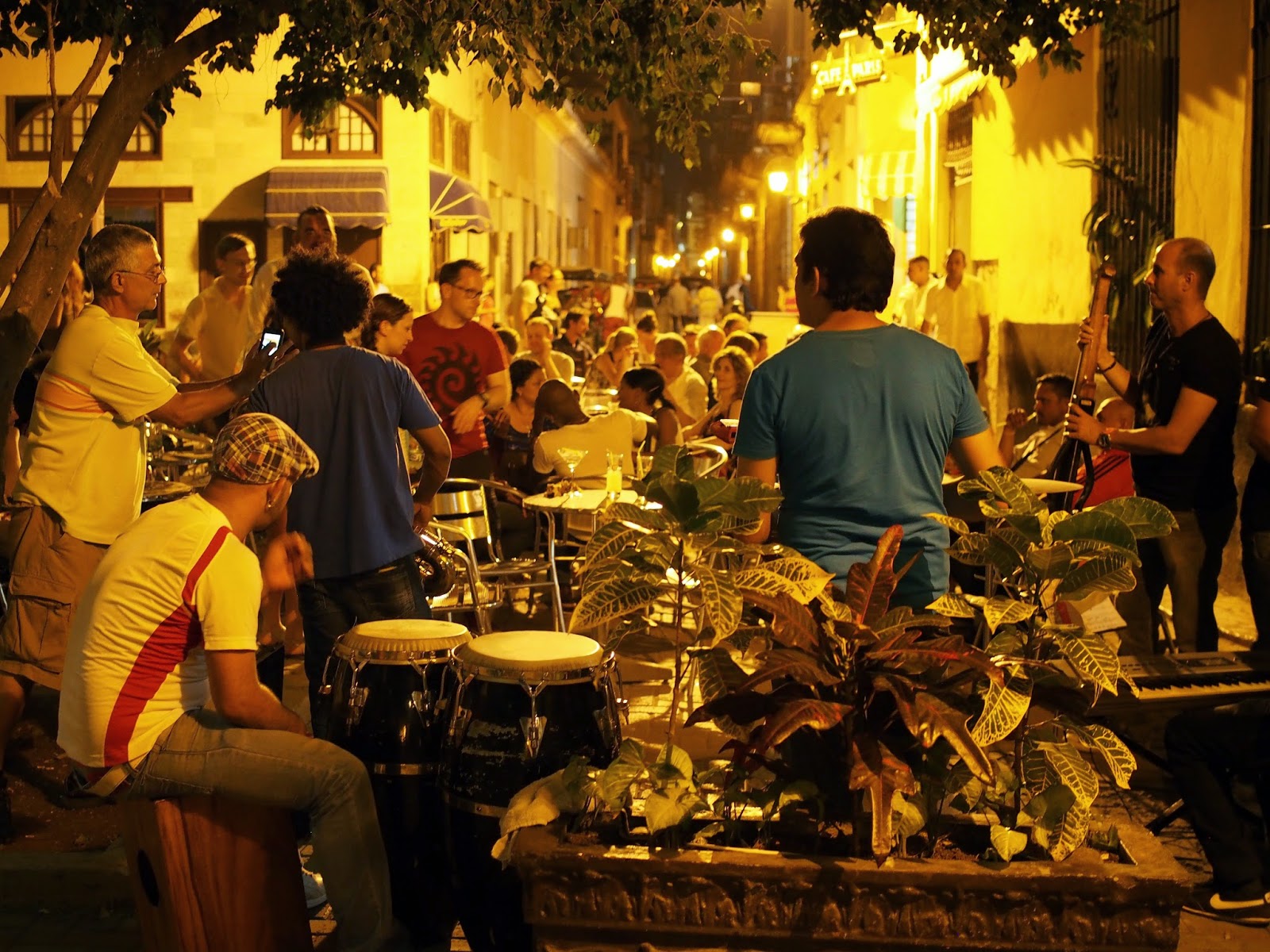 |
| Jazz at Cafe Paris |
Taking a stance on this hairy dialogue would be a more ambitious enterprise than I’m willing partake in a blog post. But I can simply tell you my experience in Cuba. My memory of Havana was running along a tranquil Malecon on a muggy robin blue morning. It was seeing a virtuoso musician playing the crap out of his sax and flute for a crowd of gringos paying a week’s Cuban wage for mediocre Mojitos. It was witnessing entrepreneurial spirit in a communist country in the form cab drivers who jack up their fares when picking up around nice hotels, and in the form of the incessant jineteros who whisper offers of cigars before whispering offers of weed as they pass you by in the streets. It was walking through an old town filled with gorgeous colonial houses in vibrant blues and faded reds in various stages of dilapidation or restoration. It was paying $8 for a meal in the posh tourist district while locals were paying less than a dollar for theirs in cafeterias less than 5 minutes away. And it was passing by houses of Cuban families whose living rooms open straight into the streets, offering passersby intimate looks into their dining, television watching, and family conversations.
The group had decided not to stay completely in Havana, as entrancing as it was, but rather to split our time between Havana and Vinales – a rural agrarian valley 4 hours west of the capital. The idea was to do half city half country, half music and culture, the other half hiking and rock climbing… you get the idea. Vinales did not disappoint. Between hiking through verdant tobacco fields on the way to a pool 250m inside the “cave of the palms,” rock climbing the sharp limestone mogotes, swimming in a warm lake in the “Valley of Silence”, and cigar-smoking nights unwinding from the activities ofthe day, we’d had a very fulfilling taste of the charms of rural Cuba.
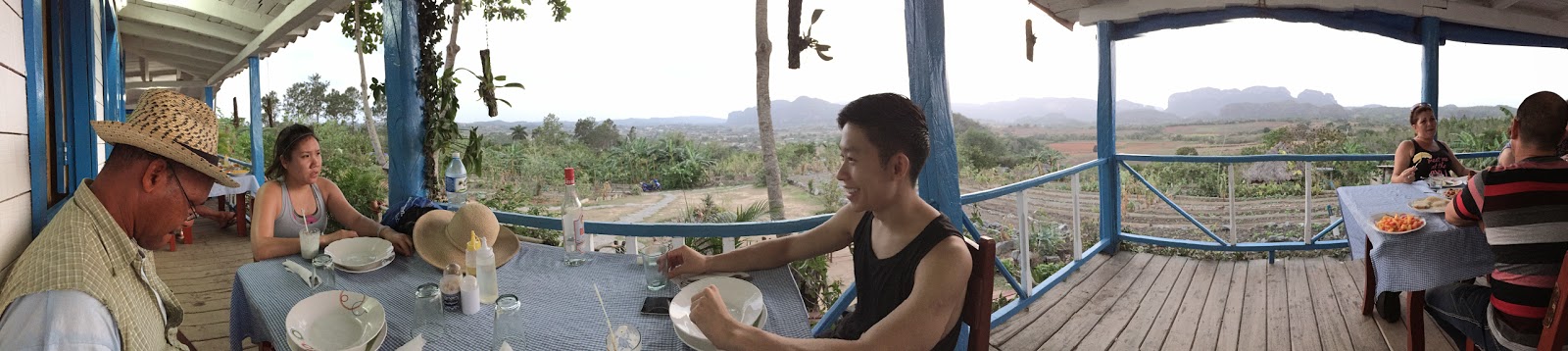 |
| Dinner and sunset in the Valley of Silence |
What really made Vinales memorable for me were some of the people we met there. Our time here was made immeasurably more special by stellar Cuban guides. The morning we were going climbing, we were promised a rock guide at 7am, but waited until 8:30 (Cuban pace of life I suppose) before our guide came in the form a Yarobys Garcia. Yaro is a sinewy, unassuming man of 36 with a receding hairline (which was made harder to recognize by a close buzz). He also carried a slight slouch, which in combination with his get up of a loose t-shirt, cap, and sport sunglasses gave off a strong tourist dad vibe. Yaro is a native son of Vinales, and started climbing in 1997 on a date he remembers by heart. He has been one of the handful dedicated Cuban climbers in Vinales who have developed the region from lonely mogotes, home previously only to the native crabs and jutias, to the now up-and-coming climb destination with over 300 bolted sport routes.
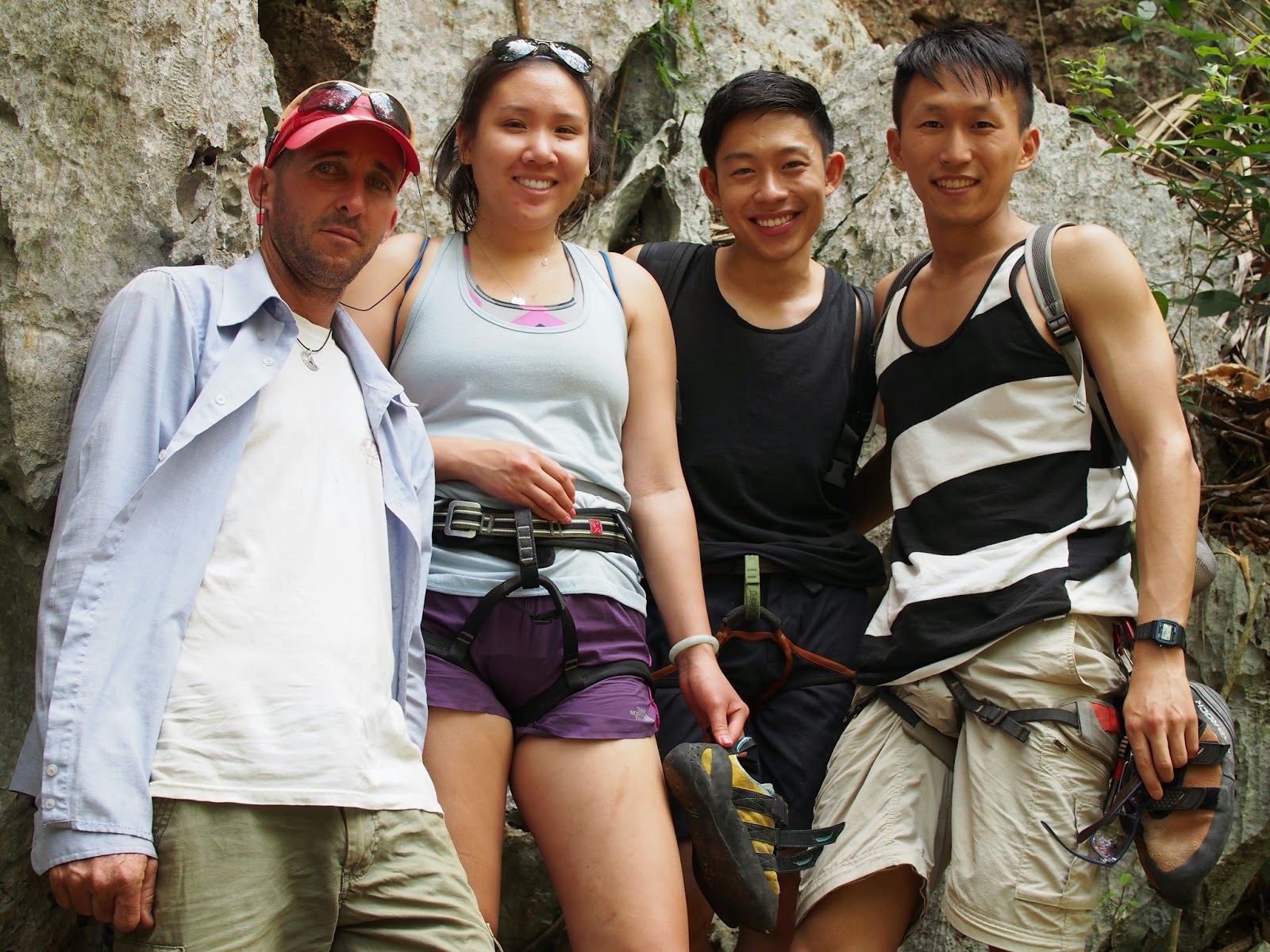 |
| Yaro and the crew |
When we swung by his home to pick up gear, we were greeted in the yard by two uncanny black kittens who shadowed us quietly as we got ropes and quickdraws. To say that his home was humble would be an understatement. It’s a wooden shack at the edge of town closer to the limestone crags than the people of Vinales. The place was shockingly smaller than my Brooklyn studio, roofed with palm leaves and essentially uninsulated or air-conditioned against the Cuban heat and humidity. Yaro lives to climb, and his home was living proof. Climbing the razor sharp limestone in the valley was great fun, even in such a sweltering muggy day as the one we chose.
Some (especially the Canadian and European tourists) think the Americans will spoil the jewel that Cuba is now (ignoring the fact that their own recent presence has been a similar agent of change to a lesser degree). Others, including many Cubans, think American capital will be good for Cuban livelihoods, and cannot wait to be reunited with families across the strait. I don’t presume to know which (if either) side is “right,” but I am sure that once the floodgate is breached, Cuba will change very much very quickly, and the beautiful country we saw today will not be the Cuba we come back to in five, or even two years.
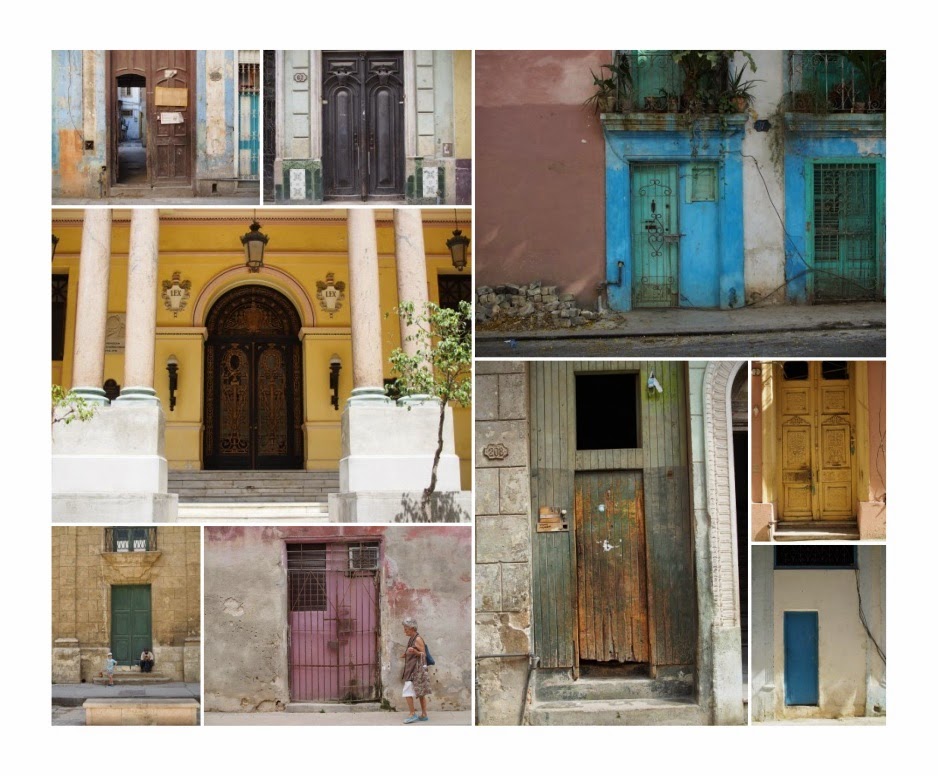 |
| Havana has pretty doors |
 Jack Wang