Month two of the pandemic. Eating out, social gatherings, toilet paper are all things of the distant past. However, we’ve all started reading again (at least once we’ve finished Tiger King and are sick of re-watching the Great British Bakeoff). Thought this would be a good time to share some of my personal favorites. Each one of these books left a deep impression on me, some delighted, others changed the way I think about the world, every single one I recommend (almost) unconditionally. Here they are, ordered alphabetically by title.

“A Tree Grows in Brooklyn” by Betty Smith
My sentimental favorite bildungsroman. Betty Smith tells the story of Francie Nolan, a poor Irish-Austrian girl growing up in impoverished pre-World War I Brooklyn. The novel is clearly autobiographical in part, full of genuine feeling in the oddly tender depictions of poverty. Father Johnny Nolan is a good-natured singer who is haunted by his alcoholism and his inability to provide for his family. Mother Katie is a beautiful woman with strong will and pride and a great sense of purpose to create a better future for her children. Younger brother Neely completes the family as a obedient and kind boy who is favored by his mother over Francie. Each character in the book is full of life, truth, and beauty, but Francie herself is truly a miracle of a character. She is intensely aware of herself, her surroundings, and the human condition. But in spite of her precociousness, she is deeply vulnerable and is repeatedly hurt by the indignities of poverty. The Nolan children experience hunger, humiliation, and tragedy in spite of the good intentions of their parents. However, their shared experiences in tragedy also help temper them into individuals of great resolve. The book is written with tenderness and realism, and it’s a classic that I will come back to again and again.

“A People’s History of the United States” by Howard Zinn
It’s cliched, but its true, I’m one of the countless undergrads who discovered critical history through Howard Zinn’s definitive history of oppression in America. Doesn’t take away from the astounding work of scholarship it represents, even-handed it is not, but Zinn certainly has pointy points of views, and he backs them up with history.

“A Visit from the Goon Squad” by Jennifer Egan
I’m in love with this book (or collection of thematically and plot-connected short stories, or novels, or whatever it is), and I think I also might be in love with the character Sasha (arguably the “main character” who appears in several of the 13 chapters/stories and for me at least serves as the heart and conscience of the work; or, I might just be in love with Jennifer Egan. Haven’t come across another work of fiction quite like this one… ever.
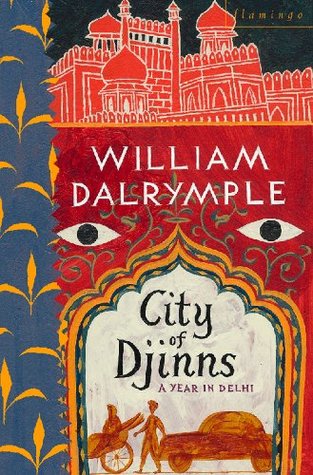
“City of Djinns” by William Dalrymple
Dalrymple makes a compelling case that the title of the eternal city belongs to the city on the Jumna/Yamuna (which has been continuously inhabited since the 6th century BC) instead of the Tiber. The book follows his one-year stay in the ancient capital with his wife Olivia, and as readers we get to know the city through colorful locals such as Madame Puri the spunky maternal Sikh landlord, his resourceful cab driver, and the sage-like Muslim scholar Dr. Jaffrey. Dalrymple paints Delhi as a quicksilver city, constantly changing and often at a maddeningly quick pace. We follow him as he learns the history of the city from pre-Islamic days of Hindu despots, to Muslim rulers of the early AD centuries (often equally bloodthirsty), through the Mongol invasion and the long rule of the Moghul emperors, and past the relatively brief British dominion to the modern era. Always vivid, seemlessly told, one cannot help but want desperately to visit Delhi after a reading.

“Consider the Lobster” by David Foster Wallace
DFW’s genius is real, it is total, and it is overwhelming. Every essay in this collection exudes Wallace’s stunning intelligence, but never to the point of being overbearing or pretentious. He is unbelievably clear and accessible in communicating some very complex ideas that for most writers, the best efforts would end up hopelessly incoherent. Underlying each essay, there is also a deep sense of goodness and honestly; there were many times where passages on ethical issues revealed an author who strives towards morality but takes no shortcuts. The world is worse off without this amazing writer.

“Everything is Illuminated” by Jonathan Safran Foer
The story is of the holocaust, but maybe only one or two chapters actually talk about the events of the holocaust. The rest of the book instead meditates on the ideas of memory, tradition, familial and communal continuity, and love. Most of all however, we as readers are constantly provoked to think about the surface between reality and fiction, and how that surface is manipulated by memory, narrative. The magical realism parts of the book create a fictional and fantastical history of Trachimbrod, a Ukranian town wiped off the map by the holocaust. This account is informed by elements of the “reality” of the novel, but we are left to think about maybe how salient and weirdly true this fictional account might be sense the real history of this community and it’s peoples have been so completely extinguished.

“Genghis Khan and the Making of the Modern World” by Jack Weatherford
Probably my favorite history book of all time, in short, Genghis Khan gets a bad rap. While most of us know him with raping and pillaging, he deserves to be remembered instead for his genius in war and wisdom in peace. He championed freedom of religion, free trade, fair trials, forbade torture, made strides towards gender equality, established innovations in good government administration like regular census and the first international postal system. Okay yes, he slaughtered, raped, and pillaged too, but his positive humanist legacy is much more lasting.

“Team of Rivals” by Doris Kearns Goodwin
Historical biographies don’t get much more compelling than this. Kearns Goodwin weaves a riveting yarn of how Lincoln as a relative upstart earned his party nomination over figures of greater prominence like William Seward, Salmon Chase, and Edward Bates and then after pissing these men off remarkably invited them into his cabinet, and managed through the course of his administration to turn bitter resentment into true friendships and undying loyalty.

“The Emperor of All Maladies” by Siddhartha Mukherjee
The author manages to make the multi-millennia long history of cancer read like a mystery novel. In the early 20th century, what used to be an un-treatable disease began to be attacked by William Halsted and his followers starting with breast cancers by radical mastectomies . Most of the book is devoted to the rest of the century in which chemotherapy is added too our arsenal, starting with anti-folates by the work of Farber. The author also ties in the political story; how Farber, Mary Lasker, the Jimmy Fund and others brought about the national attention and the subsequent national investment into cancer research. We also learn of very recently-developed targeted small molecule drugs which take advantage of the new mechanistic understanding of cancers that was the fruit of the massive research efforts. Throughout the book the author, himself an oncologist, never fails to tie in the human side of this story, giving us insight into the lives of patients and giving the disease a human element that I have often ignored as a former biologist.

“The House of God” by Samuel Shem
In the tradition of the absurdism of Vonnegut and Hunter S Thompson, this fictionalized account of an internal medicine intern’s year at Beth Israel in the 70s flows with maddening energy. The humor is tar black, but actual laugh-inducing. The absurdities are surreal, and so appropriately is the prose. Even if the story had no relation to the reality of modern medicine, it’s a story damn well told. However, I’m told that relation to reality it does indeed bare. More than 30 years have passed, so much has changed, but the central cry of the book, the cry for humanity in modern medicine, must not have diminished in relevance. This has been called Catch-22 with stethoscopes, but despite all the darkness, “The House of God” is an optimistic book. It feels written to move, as a petition disguised as art.
 Jack Wang